
Master California Water Rights
with Evidence-Based Training
SEARCH. VISUALIZE. GET IT.
Why Choose Our Online Courses?
Evidence-Based Learning - All information is source-linked
12-Month Course Access - Retain knowledge & refresh anytime
Full Information Chain - Not just laws and regulations, but the All-In-One information chain: websites, documents, databases, maps, and visuals
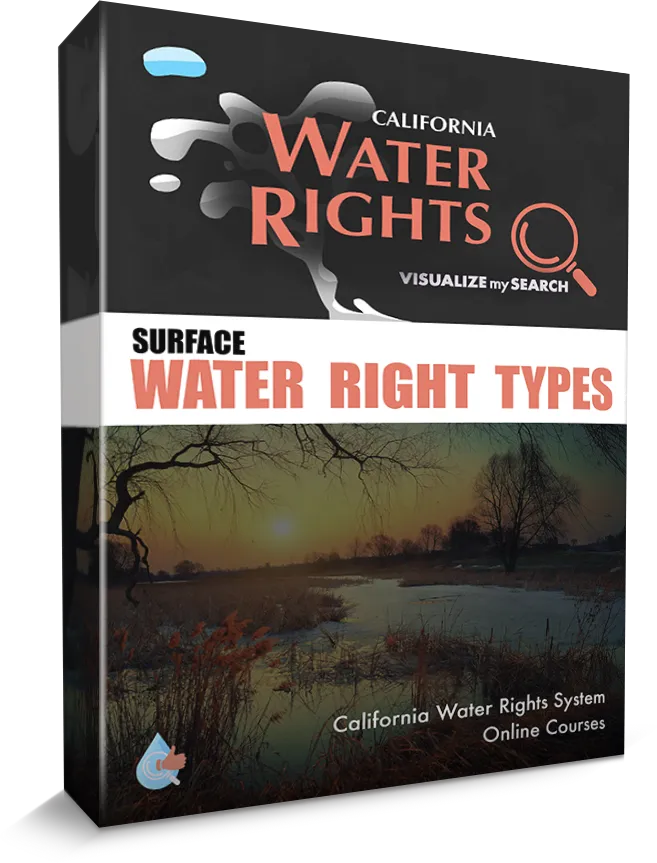
Surface Water Right Types
This course offers an overview of California’s unique blend of riparian and appropriative water rights and provides an in-depth exploration of six major types of surface water rights. It covers their terminology, practices, authority, terms and conditions, as well as relevant case studies.
$157
One Year Access

Water Rights Information & Database
In this course, you’ll learn to search for water right information using eWRIMS (electronic Water Rights Information Management System) and interpret the search results. You’ll also become familiar with the three key water right documents — Application, Permit, and License.
$117
One Year Access
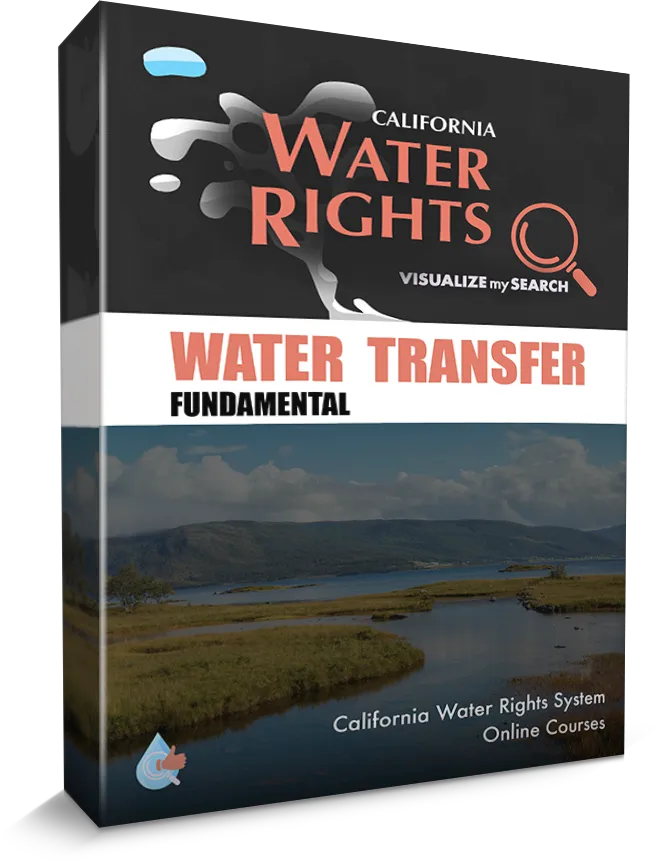
Water Transfer - Fundamentals
In this course, you’ll learn about water transfers, including the types of water that can be transferred, regulatory approvals, and the major components involved. You will also explore the four general categories of water transfers. Additionally, we’ll cover the authority and criteria for water transfers, as well as the concepts of stored water, reservoir refill, and consumptive use.
$77
One Year Access
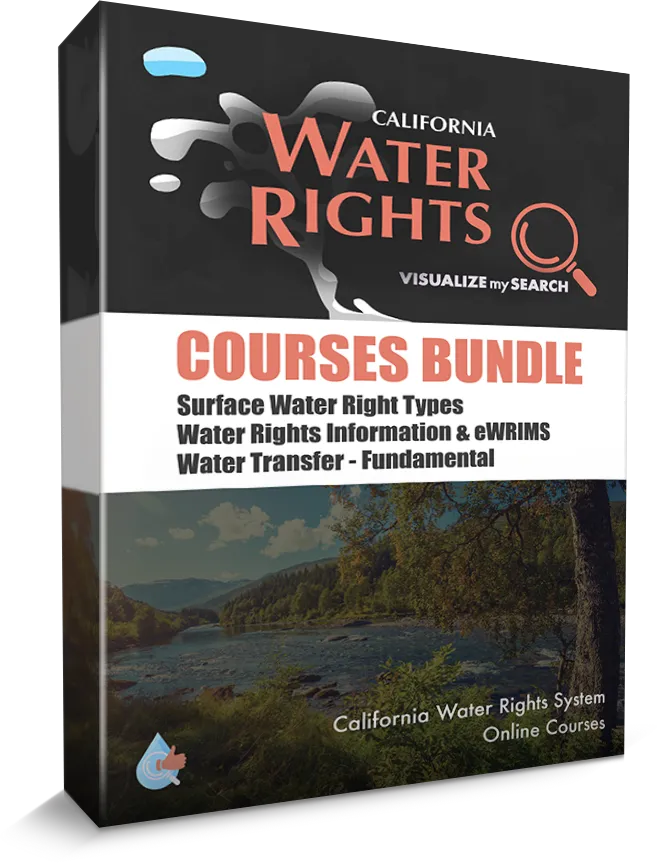
Courses Bundle
This Bundle includes the following courses:
Surface Water Right Types Course
Water Rights Information & Database Course
Water Transfer - Fundamental Course
Bundle & Save! Get instant access to all 3 of our courses now!
$351 $257
One Year Access
GET OUR FREE 30-Day MINI-COURSE:
A PRACTICAL STARTER KIT!
CALIFORNIA WATER RIGHTS
MINI-COURSE
This mini-course features three lessons that guide you to (1) dive into a selected surface water right type, (2) discover the essentials of a water right through eWRIMS’s Public Summary Page, and (3) gain a clear overview of water transfers – the fundamentals of a water market.
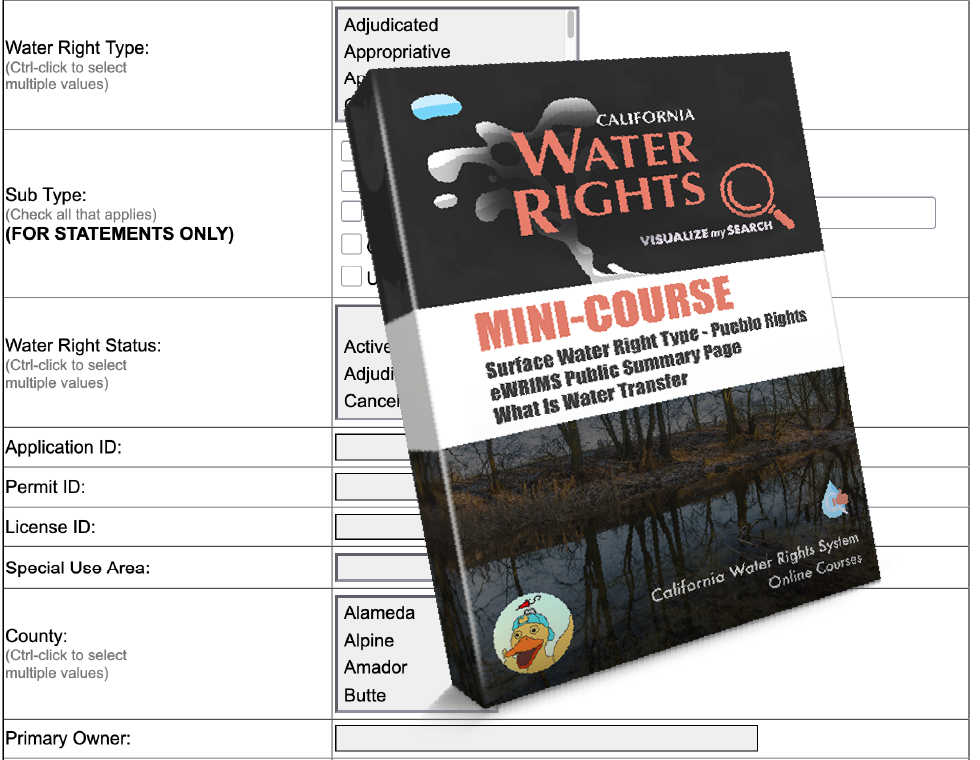
What you'll learn from this FREE 30-day course?

Pueblo Rights
You’ll explore the history of California’s colonization to learn Pueblo water right and its right holders, priority, water use, conditions for non-use, and due diligence.
#1 - Water Right Type
eWRIMS Public Summary Page
We'll guide you through the Public Summary Page, demonstrate a case study search, and explain its water right documents and information.
#2 - Dabatase
What Is Water Transfer?
You’ll learn what a water transfer is, including transferrable water, regulatory approvals, and the major components involved in a water transfer.
#3 - Water Market

Why Learn Water Rights?
Understand how water is allocated between supply and demand
Identify legal and regulatory constraints on water availability
Communicate effectively with attorneys and regulators
Earn credibility in public meetings and client presentations
Gain respect from peers for seeing the full picture
Know when to bring in legal advice
Make informed decisions in multi-disciplinary teams
Position yourself as a strategic thinker
Open doors to leadership and project management roles
Boost Your California Water Rights Knowledge with This FREE
Collection of
60+ ONE-PAGERS

Nonprofit Discount Available
We believe that improving understanding of California water rights benefits the broader water community. Discounted pricing is available for qualifying water-focused nonprofit. Please contact us to learn more.